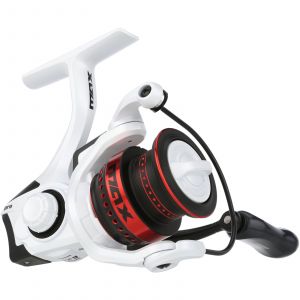
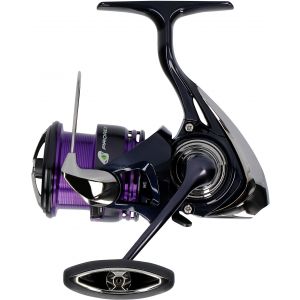
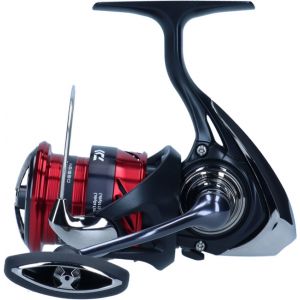
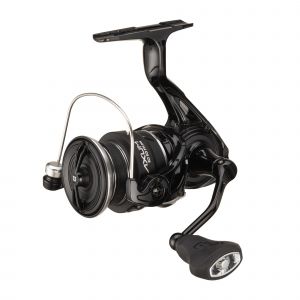
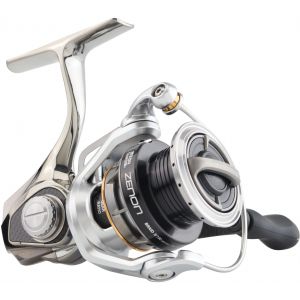
Buy the gear here. Finesse fishing is a collective term for fishing with light equipment primarily for bass, but also for zander.
When talking about finesse fishing, it often involves methods like Texas, Carolina, dropshot, Ned, Neko, or Wacky. These are productive fishing techniques that have achieved great success in recent years. Since it's about fishing that is often to be performed with finesse - read careful presentation and gentle retrieval - you should choose a rod and a reel that harmonize with the method. A light, sensitive rod combined with a smaller reel allows you to retrieve the bait with precision, feel subtle bites, and then quickly hook the fish. Should you choose a spinning or baitcasting reel? Well, there really isn't a right or wrong, just choose the reel that feels right for you.
Whether the reel comes with pre-spooled line or not. If the line is included, just unpack your gear and start fishing!
Line included
This indicates the size class of the reel. The size is specified differently depending on the type of reel, and you can read more about how they’re classified under Frequently Asked Questions in each reel’s category.
Reel size
Refers to which type of fishing the product is intended for.
Example: A spinning reel is intended for the spin fishing method.
Type of fishing
Refers to how many kilos the reel can brake. The more kilos the reel can handle, the more powerful the drag. Many spinning reels have a braking strength up to 5 kilos, and that’s sufficient for fishing with standard lures (around 10-30 grams) and fighting our most common freshwater fish. However, when casting really heavy lures, like in heavier pike fishing, you want the reel to handle at least 10 kilos of braking strength. Saltwater anglers and extreme fishermen targeting the largest species require a really powerful drag that can withstand all the stresses fishing entails. A super-strong drag with over 20 kilos of braking force is not uncommon in this genre.
Max drag capacity grouping
Here, we’ve categorized the products based on which fish you want to hook. We’ve relied on what manufacturers specify, but also on experience of what usually works. The list could almost be endless, and many things work for more species than we’ve listed, so don’t be afraid to experiment.