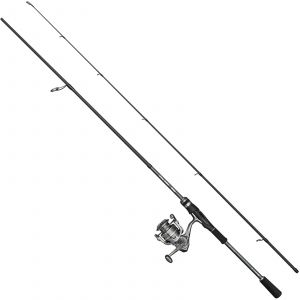
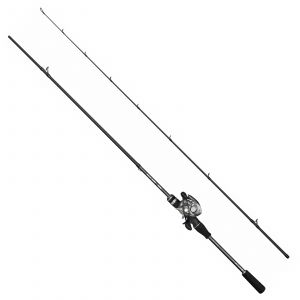
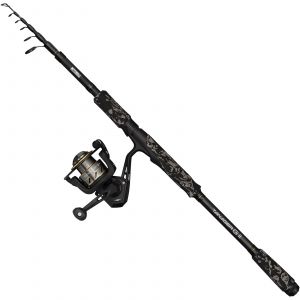
This indicates which side of the reel the handle is on.
Reel handle side
Whether the reel comes with pre-spooled line or not. If the line is included, just unpack your gear and start fishing!
Line included
This indicates the size class of the reel. The size is specified differently depending on the type of reel, and you can read more about how they’re classified under Frequently Asked Questions in each reel’s category.
Reel size
Sub category
Rod length grouped in feet + cm.
Are you a beginner and need guidance?
For regular fishing with a casting rod, you can easily group the lengths like this:
5-6 feet - Children/juniors 6-7 feet - Easy to handle - Perfect for boats. 7-9 feet - Most popular, especially for fishing from shore. 9+ feet - Coastal fishing and river fishing, etc.
Rod length
Refers to how many centimeters long the disassembled rod is. This can be good to know if you’re traveling or packing it into a motorcycle bag.
Rod length when transported
Refers to which type of fishing the product is intended for.
Example: A spinning reel is intended for the spin fishing method.
Type of fishing
Refers to which type of rod this product pairs with. The most common rod types are spinning rods and casting rods. Casting rods pair with trolling reels, saltwater reels, low-profile reels, and baitcasting reels. Spinning rods pair with spinning reels.
Rod type
Casting weights simply refer to the weight of the lure a rod is intended for. A rod with a casting weight of, for example, 10-30 grams is optimal for casting lures within that weight range. Exceeding it risks breaking the rod during casting, while using lighter lures makes casting difficult.
Max casting weight
What is gear ratio? The term gear ratio, or 'gear ratio' in English, is a value that indicates how many turns the reel’s spool makes per crank. A normal gear ratio is around 5.0:1 and up, meaning the spool rotates five times per crank. A high gear ratio, 'high speed,' is typically around 6.5:1, meaning 6.5 rotations per crank. Such a reel can be useful, for example, when fishing for sea trout on the coast, as trout often like a bit of speed on the lure.
Are you a beginner and want better control over the lure you’ve cast? Use a reel with a slightly lower gear ratio, around 5.0:1.
Gear ratio grouping
Refers to how many kilos the reel can brake. The more kilos the reel can handle, the more powerful the drag. Many spinning reels have a braking strength up to 5 kilos, and that’s sufficient for fishing with standard lures (around 10-30 grams) and fighting our most common freshwater fish. However, when casting really heavy lures, like in heavier pike fishing, you want the reel to handle at least 10 kilos of braking strength. Saltwater anglers and extreme fishermen targeting the largest species require a really powerful drag that can withstand all the stresses fishing entails. A super-strong drag with over 20 kilos of braking force is not uncommon in this genre.
Max drag capacity grouping
Here, we’ve categorized the products based on which fish you want to hook. We’ve relied on what manufacturers specify, but also on experience of what usually works. The list could almost be endless, and many things work for more species than we’ve listed, so don’t be afraid to experiment.